
Vision
We aspire to being a world-leading source of integral thinking and pragmatic applications in the fields of human development, economics and sustainability.
Mission
Our mission is to contribute collaboratively to the development of integral metatheories and frameworks and to their practical implementation in economic, social and political systems to promote harmonious, resilient and sustainable development of people and planet.
Values
We aim to lead by example by embodying these core values:
- Integrity
- Honesty
- Humility
- Curiosity
- Openness
- Collaboration
- Humour
Goals
- Advancing human flourishing within planetary boundaries
- Exploring holarchical and fractal patterns of development
- Economics as if consciousness mattered
Core Strengths
My diverse work experience in two special countries on two continents – South Africa and Switzerland – together with a rich personal growth journey, have helped me develop a unique set of skills

Innovative, integrative thinking
I bring an integrative and systemic thinking style to problem-solving, which allows me to challenge prevailing paradigms and find innovative solutions to complex problems.

Quality analysis and writing
I apply strong quantitative and qualitative analytical skills and deliver high quality written output through paying attention to detail.

Clear communication
I communicate complex concepts effectively to a wide diversity of audiences.

Multiple perspectives
I bring a crucial dimension to understanding and navigating sustainability transitions, namely a deep appreciation of different personality types, worldviews and value systems.

Interpersonal skills
I am naturally diplomatic and am a collaborative team player, striving to bring out the best in those I work with.
Biography
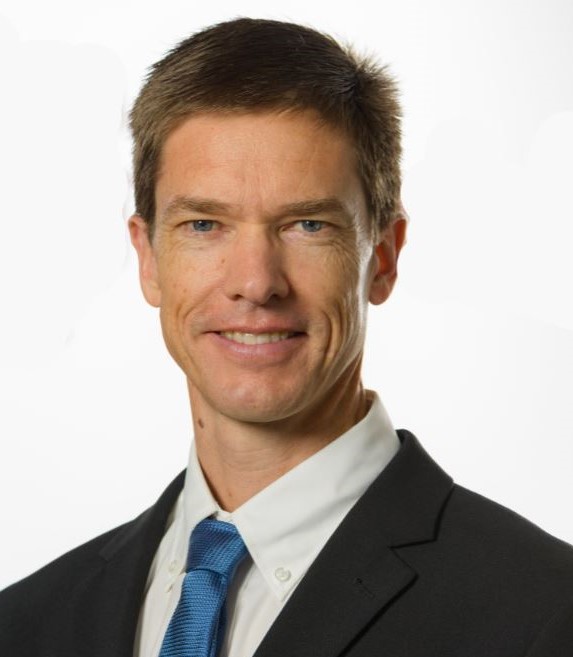
Jeremy Wakeford, PhD
Dr Jeremy Wakeford is an integral development economist with a passion for building a more sustainable and resilient future for people and the planet. He graduated top of his class with BA (Honours) and MA degrees in Economics from the University of Cape Town (UCT). In 1996 he won the prestigious Old Mutual/Nedbank Budget Essay Competition and Cambridge Scholarship – a national competition for postgraduate economics students – which enabled him to read for an MPhil degree in Economics at Cambridge University. Jeremy declined an offer to do his doctorate at Cambridge in order to begin working in academia in South Africa. Later, he earned an interdisciplinary PhD in Sustainable Development from Stellenbosch University. After graduating in 2012, he was awarded a two-year Postdoctoral Fellowship at Stellenbosch University to conduct Green Economy research.
Jeremy’s work experience spans over 25 years in academia, research, consulting, think tanks, sustainable finance, and NGOs. He began his career as a Lecturer and then Senior Lecturer in the School of Economics at the University of Cape Town, where he taught postgraduate and undergraduate courses on Development Economics, Econometrics, Monetary Policy and the History of Economic Thought. Subsequently, he was appointed as an Extraordinary Senior Lecturer in the School of Public Leadership at Stellenbosch University, where he convened and taught a module on Globalisation and moderated the module on Research Methods in the MPhil in Sustainable Development. During this phase he was also a Research Associate at the Sustainability Institute in Stellenbosch, South Africa, where he led two major research projects commissioned by the UK Department for International Development. Between 2008-2015 Jeremy also consulted to a range of government departments, private sector companies and NGOs on energy economics and sustainability. He wrote a monthly column called “Energy Matters” for Engineering News Magazine, served as Consultant Editor and columnist for Energy Forecast Magazine, and published frequent op-eds in several major newspapers including Business Day, Business Report and the Mail & Guardian.
In 2015 Jeremy was head-hunted to join Quantum Global Research Lab (QGRL) as Senior Macroeconomist. QGRL was an Africa-focused think tank set up in Zug, Switzerland, with a mission to build bottom-up econometric models and provide research-based advice to African policymakers. Subsequently, Jeremy shifted to the sustainable finance industry, where he took on the role of Impact Manager at Obviam, an Impact Investing company which managed Switzerland’s Development Finance Institution, SIFEM. Most recently, he was Head of Economy at the non-profit Faya Foundation, which is devising a novel model of sustainable development that provides financial incentives for environmental stewardship combined with socioeconomic development projects. He currently acts as Senior Advisor to Faya Foundation.
In July 2026 Jeremy became a full member of the Institute for Integral Studies, an independent research institute that aims to promote holistic, transdisciplinary research based on an integral epistemology. Since March 2023, Jeremy has served as the Chairman of the World Association of Integral Scholars (WAIS), a network committed to promoting scholarly excellence in the understanding and application of integral metatheory. He previously served as Chairman of the Association for the Study of Peak Oil South Africa (ASPO-SA), a non-profit organisation formed to conduct research and awareness-raising about the implications of the peaking and decline of world oil production for South African society. He also served on the Board of ASPO International.
In his leisure time, Jeremy engages in rock climbing, skiing, hiking, swimming, pickleball and wildlife safaris. He enjoys books and podcasts in the areas of economics, geopolitics, technology, history, psychology and societal transformations.